Alcides Fonseca

40.197958, -8.408312

Anxiety App

I don’t really have complex GTD needs. I just have todo’s and a calendar for the meetings/events I want to attend, so I don’t forget. iCal fits the last need very well, and I even take my calendar and todo list everywhere in my Windows Mobile Calendar thanks to SyncMate.

Anxiety is a OS X menu icon, that shows me the current ToDo, so I always get my work done. It’s really tiny and works across spaces (which I love). I really recommend people who don’t need advanced tools like iGTD or Things to try and work based on todo lists.

I do miss some features: Like changing the priority of items (or the due date, which is very useful for school assignments). And an option to show the top priority item in the menubar (like you can have the network you’re connected to).

Governo 2.0

Um pouco na onda do artigo do Paulo Querido sobre o facto de a web social ser menosprezada nas campanhas políticas cá em Portugal1 (ao contrário do que acontece nos USA) ando um pouco interessado não em política 2.0 (sendo o termo política aqui igual a campanhas políticas e isso), mas em Governo 2.0.

Então o que é isso do Governo 2.0 (tradução de Government 2.0)? Bem, na democracia é suposto todos parciparem (ou poderem participar) na vida política. Mas de momento o que acontece é que a participação de 90%2 da população é reduzida a votar nas principais eleições (e cada vez menos!). E ficam-se por aí. Ora o Governo 2.0 é o facto de as pessoas poderem participar activamente no governo do país. E não só votar e deixar os vencedores governar por si próprios. Este termo veio também na onda da Web2.0, visto que poderá ser uma boa aplicação das capacidades sociais da Internet.

Mas será isto possível? Imaginem um fórum, ou uma rede social, onde os cidadãos poderiam colocar os problemas que vêm na governação (uma espécie de GetSatisfaction para o nosso Governo) e mesmo propor sugestões? Isto seria catastrófico, e iria ser flamewars por spammers que acham que o seu partido é o maior. É triste, mas é a realidade portuguesa (ou mesmo humana, olhando por exemplo para o youtube).

No entanto acho que seria possível a um nível mais pequeno, como juntas de freguesias, ou pequenos municípios (embora fosse necessário sempre uma moderação, que iria ser certamente confundida com censura, mas pronto). Ou a nível de outras iniciativas, como a Metronauts, uma comunidade que organiza pequenos eventos (espécie Barcamp) mas com a finalidade de discutirem o futuro da rede de transportes na sua área. E a partipação e interessa das empresas e organizações do meio ajuda a que saiam frutos dessas reuniões. Recomendo vivamente a apresentação dada na Mesh08 sobre Government 2.0 em que este exemplo foi referenciado.

A apresentação é bastante inspiradora e faz querer mudar este país para melhor. Mas primeiro falta divulgar esta nova Web às pessoas que preferem ficar apáticas e reduzidas à passividade da televisão.


  1. Em relação a isto, realmente há uma aposta muito fraca neste campo na Internet (e ainda nem se chegou à web social), mas como Portugal também não está propriamente convertido a esta moda, se calhar eles estão a ir pelos meios que lhes trazem mais resultados. Por exemplo, por ser sócio do PSD (don’t even ask!) recebi SMSs de um dos candidatos quando veio cá a Coimbra, e ainda um telefonema no próprio dia. Isto é uma forma melhor de abordar as pessoas em Portugal, do que pelo Twitter por exemplo. 

  2. 87,6% de todas as estatísticas são inventadas. 

Teaching programming to kids

Today I have my first programming class to 8th grade students from the school I attended when I was their age. I believe that is the right time to learn how to program (later in high-school you’ll have other interests beside school, and no time to do your “homework” exploring this world) so I volunteered to give 3/4 extra-curricular classes after school.

I had 10 students ( most of the ones signed up missed because they had a field trip) today and they were really exciting about doing programs and probably because of that, this 13 year old kids learned in 1h30 what it would take freshmen from Computer Science 3 hours to learn! (Although I didn’t went so deeply as a CS stud would).

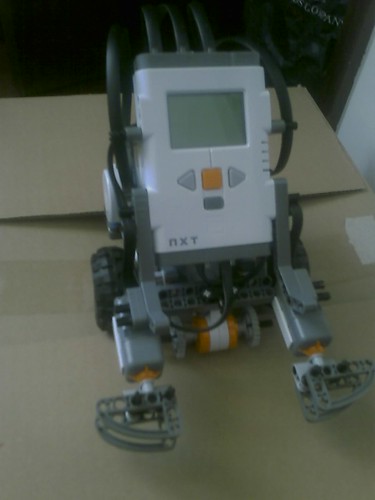
I’m find this course to be really promising and next class we’ll do some prime number magic, and the one following something with Twitter API. And if I get some robots borrowed from the University, maybe we’ll play with that too!

If you are interested and you understand Portuguese, you can take a look at the wiki page.

Dropipe

Dropipe is a Mac OS droplet to where you can drag files to upload to a TarPipe workflow. Just open the DMG and drag it to your application folder (and from then to the dock) or to the desktop, according to your preferences.

More information at Tarpipe Blog

This product is under the AWL and you should take that into consideration before using it.

Download Dropipe.app

Note: The token is kept inside the Dropipe.app, so if you want to have two instances of Dropipe for different workflows, just copy and paste (and rename it if you want). To reset the token, just delete Dropipe.app/Contents/token.txt.

SuperDuperPortugueseTechPeoplePlanet

Há algum tempo andava-se com as guerras dos planetas, sobretudo Prt.sc versus Planet Geek, que nunca me agradou e nunca participei nela.

No entanto houve umas certas trocas que trocaram o meu feedreader. Muita gente se queixou que desses planetas vinha demasiado “lixo”. A minha solução, como sou uma pessoa com (muito pouco) tempo livre, andei a selecionar e tenho-os na pasta tech-people-pt no meu google reader. E sei que há pessoas interessadas em fazer a mesma seleção, mas sem tempo para o fazer. Como tal fica aqui o link para o SuperDuperPortugueseTechPeoplePlanet para o caso de estarem interessados.

Notas: Esta lista está em constante alteração, pelo que poderão surgir novas pessoas, que caso tenham gostos semelhantes aos meus, poderá ser uma coisa boa. Subscrevo também o feed do prt.sc, mas filtrado. Já do planeta geek só tem alguns, e do webtugas e isso nem vê-los.

Youtube oEmbed API

Everyday we approach more and more the Semantic web, and one of the major steps we are giving is adopting standards. One of them is oEmbed that allows you to get some information about a online resource like Flickr, youtube, etc..

But looks like the Youtube guys haven’t managed to get some 20% time to implement it, so I did it myself based on Vikram Vaswani’s code. You can reach the endpoint at http://junk.ideias3.com/oembed/youtube.php. The syntax is explained in the oEmbed webpage, and you even got some extra attributes ;)

Me Goes Wiki!

The background

Over my internet years (more than 8 now) I’ve always kept a online presence. It started as a personal webpage, and then evolved into a blog that had several incarnations. The last one Maelstrom of Ideas, Code and Politics was probably the most successful one, and the platform was not enough for that.

Being a programmer myself, I’ve never considered my personal page as a “production” website, but rather as a development sandbox where I would try the stuff I was learning. That’s the reason why the contents of the old blog weren’t imported to this wiki, and it will still be available at a different address (http://blog.alcidesfonseca.com) but inactive. (For geeks: I had a lot of issues with encodings and I converted textile to html before adding to the database, and I take a different approach in this wiki).

So, why a wiki?

I wasn’t completely happy with the blog format. Mainly because I wanted to post code snippets, and I wouldn’t be happy if they were considered blog posts. So I considered a personal wiki. But this is not really a wiki. First there is only one author, me, but that might change in the future. Second, I don’t keep track of all the versions of a page (But I backup the database into a SVN repository). And third, some of the pages are blog posts, but inside a wiki. This might be confusing at first, but some people call it bliki.

Cool, you invented some cool new concept!

Not really, blikis are not a new thing. They haven’t reached the mainstream yet. This idea was heavily based on Rui Carmo’s The Tao of Mac. That’s a bliki I really admire. Not only for the platform, but also for the content. I could use his bliki platform Yaki, but this website is running on a shared host and I like Django pretty much. Plus, I got to play with it the way I want!

So I guess you’ll stop blogging and start writing wiki pages…

Kind of… I’ll still write blog entries, but I’ll probably write some of them (like software reviews) as a wiki page. But you’ll get the most important ones in the RSS feed, so you won’t get little insignificant pages, and the ones that I put my efforts into will reach your RSS reader for sure!

I just hope I don’t regret this :)