
I've previously written about how I believe the open web is dying. Maybe one solution to prevent it, and to save anonymity on the web is to finally fix the micro-payment that no-one ever solved.
Disclaimer: I started developing during the Web 1.0 age (a.k.a. dotCom era) and substantially improved my engineering skills during the Web 2.0 movement. I completely skipped all the Web 3.0 craze (unless you count the original Web 3.0 — the Semantic Web) not necessarily because of technical limitations, but because of the community around it. Now that everyone moved to AI, I think we can look at blockchain again, with more sober eyes.
Agents have the potential multiply the web traffic by a thousand fold or more. As an early example in software engineering (the early adopters of autonomous AIs), git traffic has increased in Github and at Anthropic and OpenAI so much they all needed new infrastructure to handle this increased load. The same is happening all across the industry.
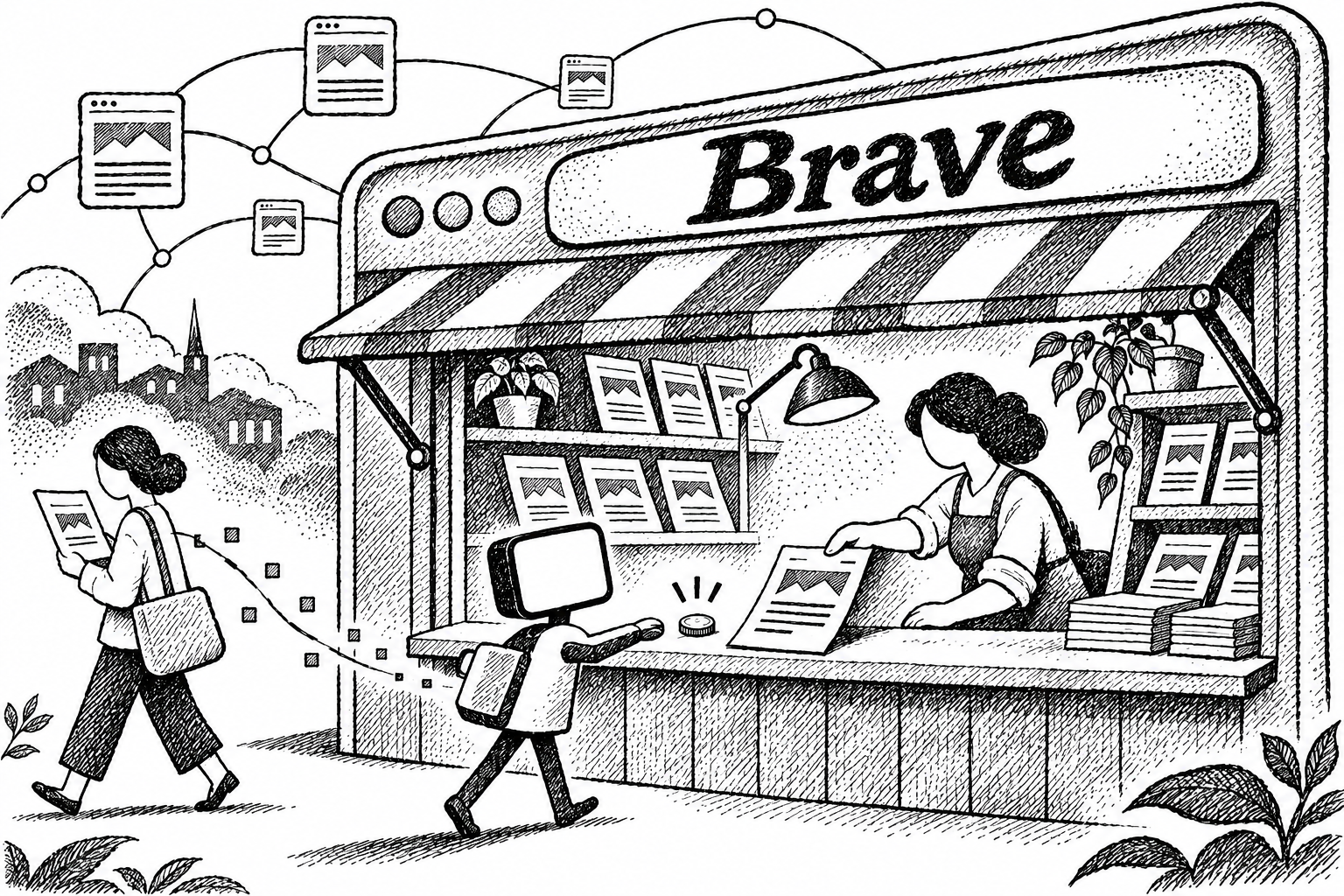
As agents become the UI for the whole internet, many service providers lose their ad-based income and become unsustainable. I applaud Brave's initiative to change the economics and start charging for agent access (although I believe it will spill over to human access as well).
Pricing follows Brave’s published API rates: LLM Context, an API designed specifically for providing search context for agents, will cost $0.005 ($5 per 1,000). Additionally, web (search for humans), news, image, video, and local endpoints will also be available for $0.005 ($5 per 1,000). Gas fees for transacting on the Base blockchain will be covered for a limited time. Since each request carries its own payment, a Brave Search API account is no longer needed to use the service.
— The Brave Search API now accepts agentic payments via the x402 protocol
Anonymous (as anonymous as blockchain can be) payments may solve the problem of the anonymous internet. You no longer need to create user accounts and prove you are human. As long as you pay for the service it does not matter. Except for age verification, which is still a problem. But it solves the lack of monetization of past-user-facing services that are now MCP providers and APIs. And at the same time it might also help prevent DDoS attacks from LLM crawlers, such as the ones this website has been suffering from (Hello dear Singaporean bots!).
Brave will be using the x402 protocol, which I was unaware of, despite knowing the 402 error code. That protocol is not yet widespread, but if bigger players start adopting it, maybe with an Apple Pay-like authorization prompt guard railing agentic purchases, we might see it succeed soon.